Monday, April 24, 2006

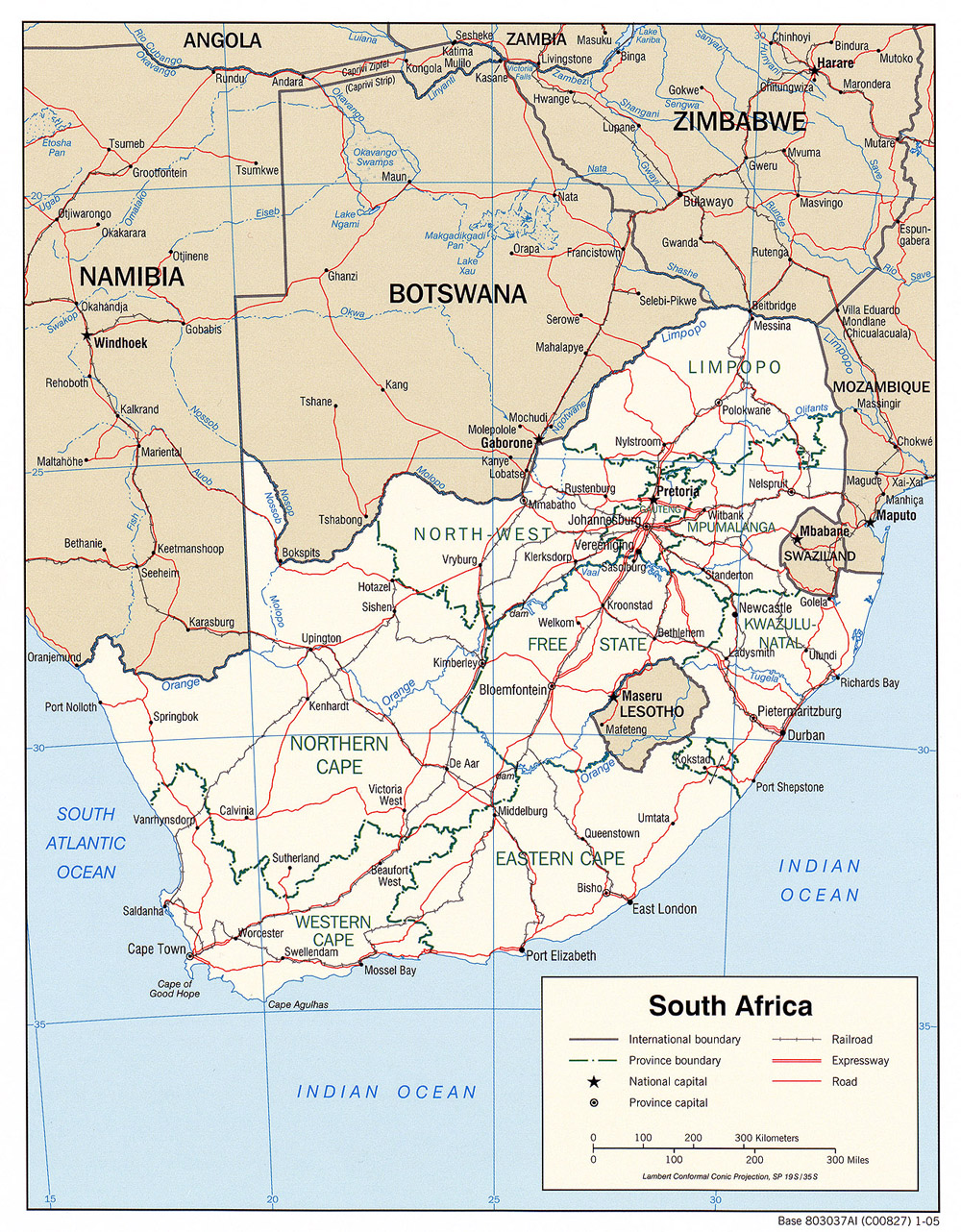
South Africa

We haven't Posted in a while because of Easter.

Here are some interesting facts about South Africa.

Capital: Pretoria
Highest point: Mafadi 11,306 feet
Lowest point: Atlantic Ocean 0 feet
Desert: Kalahari
Oceans: Atlantic, and Pacific
Rivers: Limpopo, Orange, and Vaal
Provinces:Eastern Cape, Free State, Guateng, Kwazulu-Natal, Limpopo, Mpumalanga, Northern Cape, North-West, and Western Cape
Religions: Christianity, indigenous beliefs, Islam, Hinduism
Currency: rand

Saturday, April 08, 2006

Hanseatic League

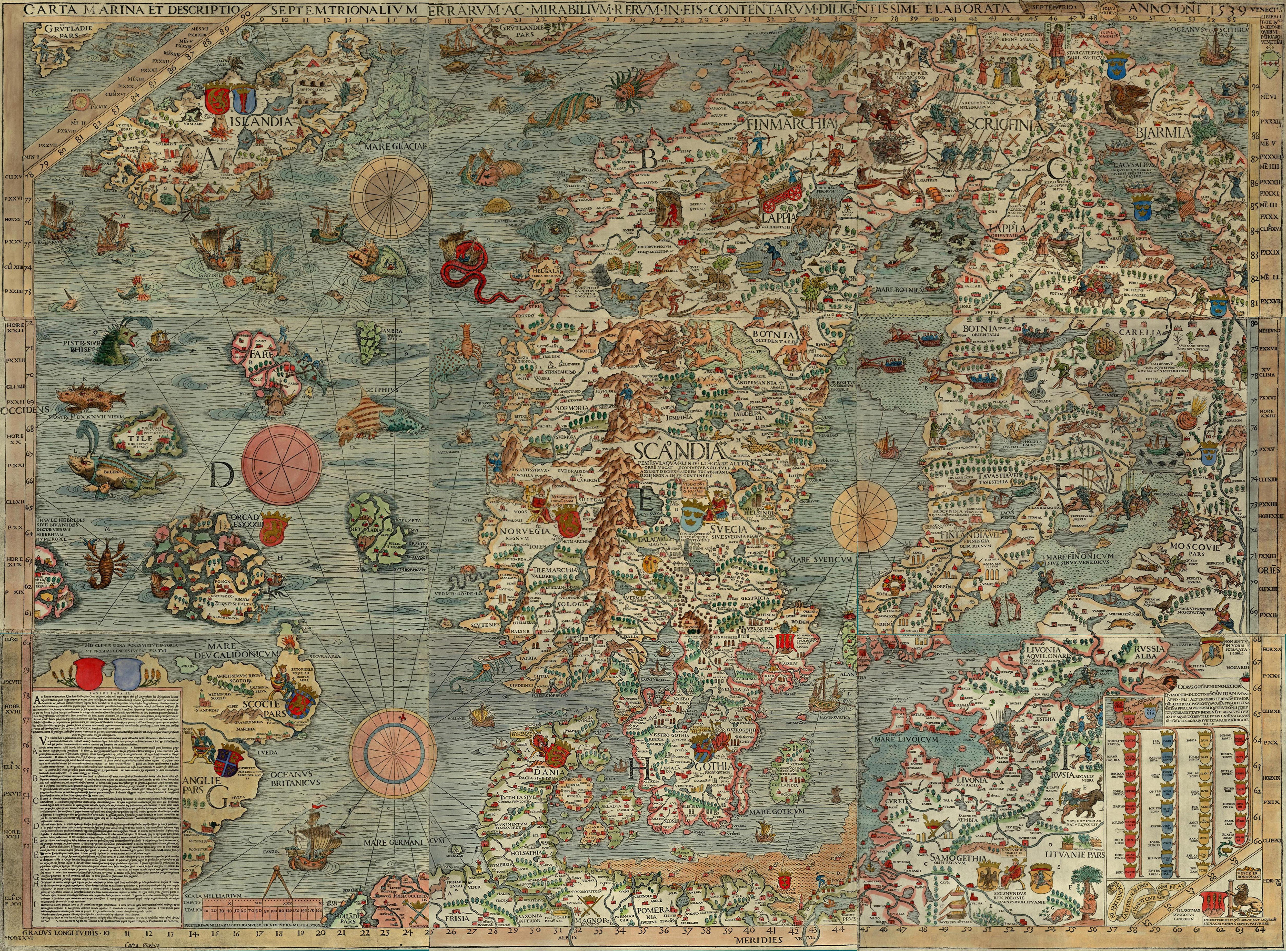
A little off topic here. Ria and Electroblogster were following the "random article" link on Wikipedia that the Mapguy discovered for us. We came upon the Hanseatic League. This group of trading cities from Sweden, Germany, Poland, Holland/Netherlands etc. created a monopoly on trade in the Baltic Sea for 400 years!! (c. 1300 - 1700)

And coolest of all is this high resolution ancient map called the Carta Marina. Check out the seamonsters and ancient names (Lappia - where the Laplanders live.) I know about Lapland because of a book I read when I was a kid called Snipp, Snapp and Snurr and the Reindeer. The three little Swedish protagonists spend a holiday in Lapland. Lapland is in Finland.

[posted by electroblogster]

Tanzania

Tanzania only became a country in 1964 when the mainland country of Tanganyika and the island of Zanzibar united. The capital is Dar Es Salaam. You can read the official website in English or Kiswahili. Tanganyika had been part of the German East Africa territory. The British got rule of it in World War I and ruled it until it became independent in 1961.

Sissal is used to make rope and twine. Sissal happens to be one of Tanzania's main crops. Yummy!

Whoaa! Wait a minute here. This is a cool country!! They have Mount Kilimanjaro, the Serengeti Reserve Park, Lions, Giraffes, Leopards, Elephants, sandy tropical beaches, HALF of Lake Victoria, and how cool is the name of that archipelago (group of islands) Zanzibar?!?!? It seems like there are lots of exotic tours that go to the Rufiji River.

There is a lot of water in this African nation. The east is on the Indian Ocean. Part of Lake Victoria (Lake Vicky for short) is in this nation. On two other borders are Lake Tanganyika and Lake Nyasa. And there is a big river running down the middle called the Rufiji River. And here is a place that will take you on tours all over Tanzania including Beho Beho. They have videos if you would like to SEE what Tanzania looks like - look out for the elephant in Beho Beho.

By the way, the country is south of the equator. They have a national park (one of those that are comprised of a little land, some islands, atols and an archipelago and a lot of water) that has 61 genera of coral alone!! That's a lot of different kinds of coral!

Zanzibar, Kilimanjaro, Tanganyika, Serengeti and so forth. These words are just plain FUN to say. I think that this Kiswahili language would be really neat to learn!

Tuesday, April 04, 2006

Mt. Kilimanjaro

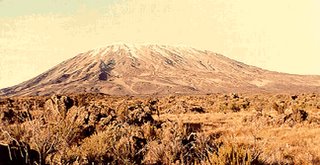
This week is Tanzania, the home of the tallest free-standing mountain in the world, Mt. Kilimanjaro.

Unlike the dangerous snow-coated pile of ice and rock that is Mt. Everest, Mt. Kilimanjaro has much plant and animal life living amazingly high on it's slopes. These creatures are a trifle exotic, but what could you expect from plants and animals living on the high slopes of a mountain?

The cold, though thoroughly bone chilling I'm sure, is not nearly as severe as those chilling temperatures on Mt. Everest which pass out frost bites and worse with an eager hand.

Here is a really interesting link about Kilimanjaro.

Mt. Kilimanjaro is made up of three different volcanoes. Kibo, the youngest, is in the middle, Shira is on the west side and Mawenza is on the east.

Anyways, climbing Mt. Kilimanjaro sounds like it would be much more enjoyable than doing the same to Mt. Everest, and I intend to climb it as soon as I can.

Friday, March 31, 2006

Praying for China

The Holy Father has a special prayer intention he shares with all the faithful each month. For the month of April, it is to pray for the persecuted Christians in China. (hat-tip Open Book)

The Vatican has announced that during the month of April, Pope Benedict XVI will focus his prayer specifically on the plight of the much-persecuted Church in China. The text of the Holy Father’s April mission intention, released today, is "That the Church in China may carry out its evangelizing mission serenely and in full freedom."

You can read about special intentions for each month at the Apostleship of Prayer website.

The Nile

The White Nile(which starts in Sudan) and the Blue Nile(which starts in Ethiopia and flows into Sudan) join together in Sudan to make the Nile which flows north into Egypt. I thought that they joined together in Ethiopia but I looked in an atlas to find where the Blue and White Niles started and found out that they joined together in Sudan not Ethiopia.

Wednesday, March 29, 2006

Solar Eclipse


I just found out on NASA that today there is going to be a total solar eclipse. The solar eclipse can be seen from Libya in North Africa. I think that it sounds realy neat and wish that I could see it from where I live.

Thursday, March 23, 2006

Library Adventure

Yesterday my mom and I were looking for books about Morocco at the Library. We found a book about French Guiana in the Africa shelf because it was numbered wrong (we think because somebody thought French Guiana was in Africa though it is really in South America). So we searched "French Guiana" to find where the book was supposed to go but the only match that it came up with was the same book that we already had. So we decided to search for "Brazil" and we finally found out where the book about French Guiana belonged.

We went and told the lady at the desk about it and it will get fixed.

Wednesday, March 22, 2006

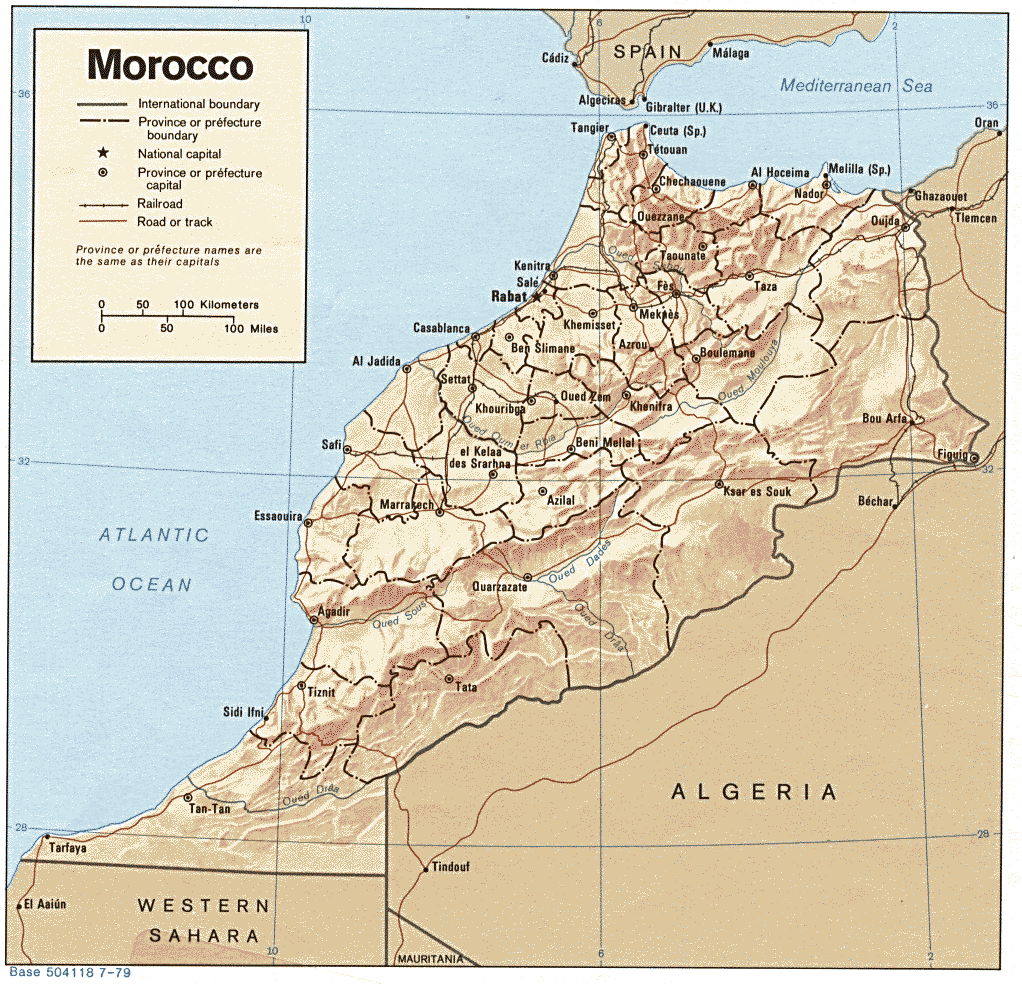
Morocco

I was just reading a book called Afghanistan to Zimbabwe. In it I found out that to get from the Atlantic Ocean to the Mediterranean sea you would have to go through the strait of Gibraltar and the Alaboran sea. On most maps the Alaboran sea is Shown as part of the Mediterranean sea.

Thursday, March 16, 2006

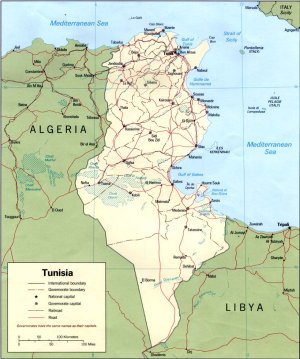
Tunisia

On Monday, March 20th,, Tunisia celebrates its 50th anniversary of independence from French rule.

Timeline of Tunisia History

Tunisia in the News: Human Rights/Terror Issue

Carthage:

Founding of Carthage according to The Story of the Romans by H.A. Guerber

Overview of Carthage and what can be seen today

Hannibal Barca and the Punic Wars

Tunisians in the Catholic Church:

Tunisia was the birthplace of numerous well-known saints, including Pope Victor (d. 199) , the martyrs Felicity and Perpetua (d. 203), St. Cyprian of Carthage (Father and Doctor of the Church, bishop and martyr) and, of course, the great Father and Doctor of the Church St. Augustine of Hippo (354-430 - also one of the Map Guy's patron saints, by the way).

We read about some of these saints this morning in Saints of Africa by Vincent J. O'Malley, C.M. (Our Sunday Visitor). We were particularly amazed at this part of the story about St. Cyprian when he is condemned to die:

The proconsul consulted his assesor. He then pronounced sentence, very reluctantly, as follows: You have long lived an irreligious life; you have gathered round you many members of a wicked association; you have set yourself up against the Roman gods and their religion; and you have rejected the call of our pious and most sacred emperors...to the observance of their rites. Accordingly, since you are found guilty of being the author and leader of most shameful crimes, you shall be made an example to those whom you have associated with yourself in wickedness; the law must be vindicated in your blood. (Here he read from his tablets.) "We order that Thascius Cyprianus be put to death by the sword." And Cyprian answered, "Thanks be to God."

Monday, March 13, 2006

The Library of Alexandria

I think the Library of Alexandria deserves a place among the Seven Wonders of the Ancient World, although if it were counted among them there would be eight instead of seven and seven wonders sounds better then eight wonders don't you think? Anyway, the Library of Alexandria must have been an incredible place to visit. There were amassed there many scrolls of the works of famous men. But tragically the Library was burnt - how is widely disputed.
There many scholars studied, Eratosthenes, Archimedes, Euclid et. alii.

Eratosthenes was a Greek who, after studying in Athens, came to the Library and in time became the head librarian. Eventually after much hard work he was the first person to calculate the distance around the Earth.

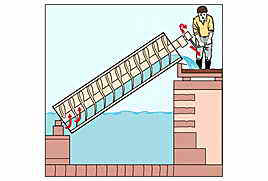
Archimedes was one of the most famous mathematicians of the ancient world. He invented the Archimedes Screw and effectively defended Syracuse from the Romans for many years with other samples of his creative mind.

Euclid was another widely known mathematician of ancient times. He is perhaps most famous for his book The Elements.

There is much more to know about the Library and you can start your explorations with this short article.

Egypt

The Map Guy doesn't know what to say about Egypt. But he approves of Egypt generally.

Things he thinks are neat about Egypt:

  • Sweet pyramids *
  • Hot (not like HERE right now)
  • There's a big sandbox called "the desert"
  • The Nile - which flows from South to North (kind of strange for such a big river.) It has the Aswan High Dam (you can see a movie that talks about how it was built called Building Big - Dams by David Maucallay) on it. It waters and fertilizes crops. And it has alligators with toothbrush birds. (ref. Tomie dePaola book Bill and Pete Go Down the Nile) According to Margaret Dashwood "The source of the Nile is in Abyssinia". Abyssinia is the ancient name for Ethiopia.
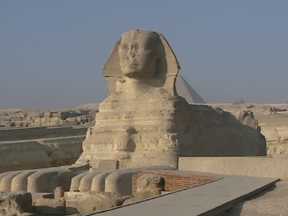
  • Stinks Sphynx. Big stone statue of a weird creature. The creature has the body of a lion (this is Africa remember) and the head of a woman I think. The nose got broken off by Napoleon's soldiers doing target practice!! What a shame!
  • Lot of old temples. Which are neat because they are so old. It is neat to think that people were in them THOUSANDS of years ago. Like the Pharaohs (the "kings" that ruled Egypt) and even Moses from the Old Testament.
  • The temples are covered with really neat writing called Hieroglyphics. For hundreds of years no-one knew how to read these hieroglyphics. Not until 1799 when they found the Rosetta Stone were they able to read them.
  • The Suez Canal is in Egypt.
  • Alexandria is one ancient Egyptian city. The library was said to have been the greatest of the ancient world. But you will hear more about this from Ria in another post.
  • Eratosthenes was a librarian. He measured the earth to amazing accuracy.
  • The Pharos (lighthouse) at Alexandria was one of the Seven Wonders of the Ancient World. The pyramids are another. Two of the seven in one country! Pretty amazing country!

The Map Guy asks: "So have we done enough?"

Electroblogster says "I guess so."

-------------------------------------------------------

* The Map Guy does not endorse the actual TASTING of pyramids. - - - maybe the pyramid candy souvenir chocolates would be OK though.

Disclaimer: Electroblogster "helped" the Map Guy do this post.

Sunday, March 12, 2006

Stories about Egypt

Hello again, I'm back. I know I just did a post but since it is the last day of Egypt study I have to hurry. Most of the titles are linked to my moms reviews of them. Now here is the reading list for Egypt:

The Golden Goblet By Eloise Jarvis McGraw
A boy living unhappily with his unkind step-brother may have a chance to be free of him and learn the goldsmith craft of his dreams.

Mara Daughter of the Nile By Eloise Jarvis McGraw
A clever slave girl finds herself playing the dangerous role for spy on two opposing sides. When she finally is ready to choose the side of the imprisoned king, Thutmose III her double role is discovered.

God King By Joanne Williamson
An unexpected heir comes to the throne of Egypt, that is until he is forced to flee for his life. In his exile he comes into contact with the fighting kings of the Judeans and the Assyrians, whom will he side with?

Shadow Hawk By Andre Norton


Pyramid By David Macaulay

St Athanasius By F. A. Forbes
A easy biography of the Egyptian saint.

The Riddle of the Rosetta Stone By James Cross Giblin
A great book on the path to the knowledge of Ancient Egyptian Hieroglyphics.

Tales of Ancient Egypt By Roger Lancelyn Green
Title says all (:

The Great Pyramid

This week was supposed to be Egypt week, and we sort of forgot to post, oops. That is really inexcusable since Egypt has such a captivating history. Its history has interested me for a long time.

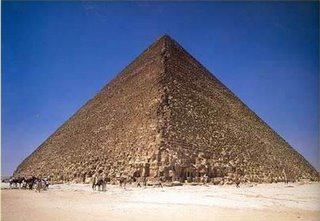
Egypt can boast of the only one of the seven ancient wonders to remain intact, The Great Pyramid. It is so tall that it remained the tallest structure in the world until the Eiffel Tower was built in the late 18oos. It took incredible engineering to build such a massive structure with out the use of modern mechanics, even without the use of the wheel. They needed a huge workforce to begin with. Thousands upon thousands of men were brought from all over Egypt to assist in the building of the Pharoah's tomb. Two huge ramps for hauling stone brought them about halfway up the pyramid. When they reached that point they used a smaller ramp that wound around the pyramid until they at last reached the top.

I said earlier that the pyramid remains intact, but it is not completely so. The outer casing of limestone is gone, stripped off to build medieval Cairo. That makes me really mad. It wouldn't have looked quite so dazzling as it would have soon after it was built, but still I think it would have looked amazing.

Sunday, March 05, 2006

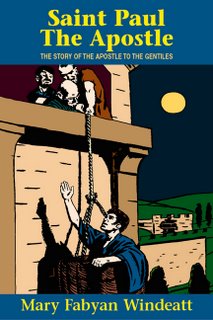
Saint Paul the Apostle

We just read a book called Saint Paul the Apostle by Mary
Fabyan Windeatt. He made a lot of friends, enemies, and converts in Greece, Turkey, and Italy.

Recently we watched a movie called Visions of Greece. It shows some of the places he went to, like: Kavala (Neapolis), Philippi, Thessaloniki, Athens, Corinth and Crete.

When Saint Paul was traveling, he sometimes wrote letters to cities he had been to because they were having problems. The letters helped teach them the truth and encouraged them. You can read these letters today in the New Testament and hear them at Mass on Sundays. They are named for the people who they were written to, for example, The First Letter from St. Paul to the Corinthians was written to the people of Corinth. Here are some more examples:

From Greece:

The Second Letter to the Corinthians - Corinth (still a major city in Greece)
The Letter to the Philippians - Philippi (just ruins today)
Letters to the Thessalonians - Thessalonica (now called Thessaloniki, and still a major city)

Other Countries:

Letter to the Romans (in Italy of course!)
Letter to the Galatians (Galatia is a region of central Turkey - including the city of Iconium, now called Konya)
Letter to the Ephesians (Ephesus - its ruins are on the coast of western Turkey near the Greek Island of Samos)
Letters to the Colossians (Colossae - its ruins are 120 miles east of Ephesus - Saint Paul never actually went to Colossae, but he wrote the letter to help with the Church there)
Letter to the Hebrews (written to the Church in Jerusalem)

Here are Maps of Saint Paul's Missionary Journeys.
Wednesday, March 01, 2006

Greek Alphabet

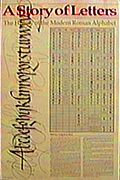
Well, we haven't really done any blogging yet on Greece, so I thought I'd just mention that the kids are attempting to learn the Greek alphabet. As Chesterton mentioned, young children can really enjoy this sort of thing in a fun setting. We got this beautiful poster from the Exploratorium Store (a funny coincidence because I found it through the search engine, but we used to visit the Exploratorium in San Francisco when I was a child) at the request of the Map Guy for his ninth birthday. Unfortunately, the poster only includes the upper case Greek letters. You CAN find the Greek alphabet (including lower case letters) here.

We also watched the film Visions of Greece, which is very beautiful and informative.

Friday, February 24, 2006

The Vatican Exhibit

When we went to the Vatican Exhibit last Sunday we had an addition to our normal crowd. My friend, "Cathy", was with us, so she is going to help me with this post.

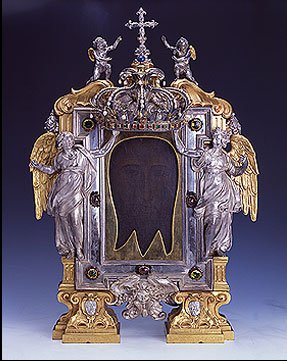
The adventure began with a video preping us for the exhibit. In the next room there was a model of the old St. Peter's Basilica. A little further on was the highlight of the exhibit(for me at least), the Mandylion. One of the first paintings done of Jesus, It is surrounded by an ornately carved frame made of gold and jewels. Here is a picture(obviously).

The Mandylion is featured in a enchanting book entitled The Weka-Feather Cloak By Leo Madigan. It is set in New Zealand. Its complex plot makes it difficult to summarize. It is about an aspiring young artist, Danny Mago, and his adventures while helping out at a convent. He finds an elevator that takes him to many of the different scenes of his adventures.

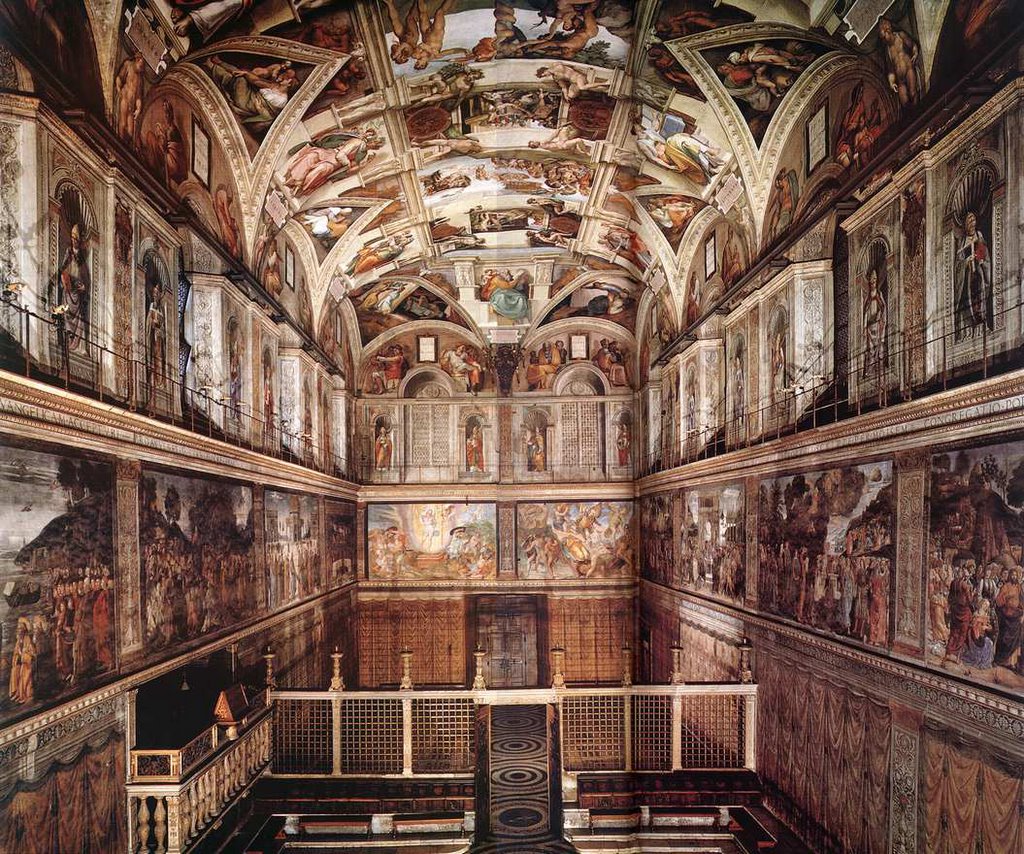
Later on in the exhibit was a replica of the scaffolding Michelangelo used to paint the Sistine Chapel. As you walk on the replica you see above you the famous portrayal of God bringing life to Adam at the begining of time. Michelangelo had to poke holes into wet plaster so the paint would soak into it and make it last longer than normal. So fresh plaster was always needed to paint these frescoes. In fact the word fresco comes from the italian word for fresh.

In the following rooms were many different artifacts of the Vatican anywhere from the popes garments, thrones, Staffs (We were especially impressed with Pope John Paul II's staff) and chalices. There were many, many chalices but one of my favorites was the simplest in the exhibit. While most of them were ornately carved of gold and bedecked with jewels of all sorts, this one was a simple cup and the paten was the bottom of a can. It was a chalice used by the prisoners in one of the worst death camps in Europe, Auschwitz. Although that was my favorite many other ones were quite spectacular. My second favorite chalice was one that had pictures of saints as well as the typical carvings and jewels. But the chalices were not by any means the only things to be encrusted with gold and gems. The Pope's vestments and the like were simply covered with them. In the last room was the staff of Pope John Paul II. Knowing that it was the staff that belonged to the great Pope, that he actually touched it, was an overwhelming feeling. At the very end of the exhibit there was a cast of Pope John Paul II's hand that you were invited to touch.

Anyways the exhibit was really, really neat and it is well worth the trip, the cost etc. as is the optional audio tour.

Thursday, February 23, 2006

Excavations under St. Peter's Basilica

This article is really, really interesting and..... I can't say (my mom won't let me use cool in my posts.)
http://catholiceducation.org/articles/religion/re0735.html
It is about the excavations, under St. Peter's Basilica, also known as the scavi. While trying to make room for a spectacular tomb for Pope Pius XI it was necessary for the workmen to dig under St. Peters. While engaged in this noble task the workmen found a series of old tombs found to be a necropilis. Pope Pius XII organized a excavation of the site. Near the center was a altar shaped tomb, the wall behind was covered with graffiti. One piece of the graffiti seemed to say, Peter is here! So it seems that the tomb of St. Peter has come to light. It was found in exactly the place tradition said it would be.
To learn more about the scavi read this article.

Tuesday, February 21, 2006

More Links on the Sistine Chapel

Here is a nice site that lets you explore the walls of the Sistine Chapel (the frescoes not painted by Michelangelo).

http://www.wga.hu/tours/sistina/index_b.html

The whole Web Gallery of Art looks like a great site.

Sunday, February 19, 2006

Old St. Peter's and the Sistine Chapel


We just went to an exhibit on objects from the Vatican. They mostly had works of art having to do with St. Peter and the popes, but also about St. Peter's Basilica - both the old one (built by Constantine) and the new one (built during the Renaissance). We also got to talk to a nice volunteer who told us a lot about Old St. Peter's and the Sistine Chapel and answered our questions we had about them.

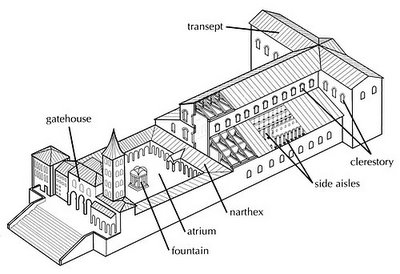
They had a neat model of the Old St Peter's at the exhibit - we found a drawing of it on the Internet (shown above with link to the site). I was excited to see it, because I never knew what it looked like and we were just reading about it yesterday. Old St. Peter's was built in the 300s at the place where St. Peter died, which was a Roman circus (it's not a circus with clowns and jugglers, it's more like the Colosseum - they might have chariot races and gladiator fights and things like that). Around 1450, the pope decided to take it down because it was falling apart. From 1475-1483 they built a chapel and when it was completed, the pope hired Botticelli, Ghirlandaio, Rosselli, and Perugino to paint the walls on the sides of the chapel. They painted the ceiling blue with stars. In 1508, another pope, hired Michelangelo to paint frescoes of the twelve apostles on the ceiling. After he started the work, Michelangelo decided that he didn't like them and came up with a different idea that we can see today. He finished the frescoes in 1512.

The groundbreaking for the new St. Peter's Basilica was in 1506 and it was consecrated in 1626.


Terri adds her own commentary about something that impressed her at the exhibit:

We saw the Mandylion [hat tip - Mrs. Brown]. The frame was made only out of gold, silver and jewels. It had angels on each side - their wings were gold and their bodies were silver. The picture was of God's face. It was really neat.